Tuesday, October 30, 2012

Hurricane Sandy - Before You click "Like" on that FB Post

Hurricane Sandy has been an incredible example of just how fallen of a world we live in - unpredictability of nature, humanity's helplessness, and tragic loss.  At the time of writing this blog, Sandy is not finished, and who knows what else will take place from what the storm leaves behind.

I write this post knowing that in the coming days there will be a ton of posts from well-meaning individuals about the storm itself being God's judgment against either the Northeast, the United States as a whole, or having to do with the upcoming Presidential election.  I want to caution anyone who is going to attempt to make such a broad statement, that they are not only insensitive to what is happening, but they are incorrect.

Jesus confronts people who had come to Him looking for the reasoning behind certain tragedies that had taken place, particularly things that had led to death.  One of the instances was a tower that had fallen, killing 18 people. (You can read this account in Luke 13).  Jesus' response to those asking whether these people were killed because of their sin, was to say, in essence, that these kind of tragedies could have happened to any one of them, and they weren't based on their sin.  In Matthew 5:45, Jesus says that God "causes His sun to rise on the evil and the good, and sends rain on the righteous and the unrighteous."

Hurricane Sandy did not take place because of some legislation, or new sin, or even a whim of God.  This hurricane is a reminder of the fallen world that we live in, that produces hurricanes, earthquakes, tsunamis, and cancer - along with a million other tragedies.  This world is fallen because of the decision of mankind to rebel against God, and that's not just something symptomatic in an individual, it is something cataclysmic throughout every molecule in creation.

Jesus said to those asking about the tower, "unless you repent, you will all perish as well."  Tragedies remind us of our need of rescue, by a God who offered His Son to pay the debt of sin that we could not pay.  Let's pray for those going through hard things, and be called to remember our need for rescue.  So when those Facebook posts start placing blame for the hurricane, remember the tower of Siloam and Jesus' words.


Monday, April 23, 2012

Birth Control: From a Pastor's Perspective...

Fertilized egg that has implanted
I am going to try to put in as few words as possible some helpful thoughts on birth control, to add to the discussion taking place, and I am very honored to do so.  Many of you will see this as part of Liz Nicholson's blog, which you can access here.  I am going to be trying to build off of some of the things that she has said in this discussion.

My wife and I have walked through most of the methods listed below, and have had to at times repent of either our ignorance, or trusting poor information given to us about how these things worked.  Often those who work in the offices that prescribe these medications do not have a full understanding of how they work, or a biblical definition of life.

Biblical Picture:

The link that Liz posted to Mark Driscoll's sermon is an excellent discussion of a lot of the theological issues surrounding birth control.  You can read the transcript more quickly than listen to the sermon if you are crunched on time, but it is worth a read if these topics have interested you.  He deals with a lot of the misconceptions about birth control that people come to by misunderstanding biblical stories like Onan, and commissions like "be fruitful and multiply."

He also deals very effectively with legalism, something that can be at the center of this issue as much as a concern for life. How you plan your family is a very important discussion.  It is sinful to be so trite with bringing life into the world that you do not adequately prepare for supporting a child/children once they are here.  Check Driscoll's sermon for a helpful discussion of this.

I want to hit quickly on 2 biblical passages that are at the center of this discussion.

1. Psalm 139, among several others like it, speak clearly of life which exists in the womb from the very beginning.  The medical community tends to define life at implantation (when the egg has implanted into the uteran wall), versus conception (when an egg has been fertilized).  This is not an effective definition logically (simply geography, not substance), or biblically.  David writes of God that he "saw" his "unformed substance", and that his "frame was not hidden from You."  Much of the Psalm is a declaration of hidden life in the womb.  So one of the major questions in birth control is when life begins.  Scripture points to this not being a question of trimesters, but from the very beginning.

2. Genesis 3:16. The Lord says to Eve that he will "greatly increase (her/all women's) pains in childbearing."  I don't believe that this statement only meant labor pains.  Human beings are incredibly inefficient at reproduction, and medical science shows that at least 50% of fertilized eggs (with no interference from BC or otherwise) miscarry.  Many are so early that it is not detectable for the mother, others occur later during the process.  Too many couples, including my own household have faced the pain of seeing an image with no heartbeat, and wondering what could have been done to prevent it.  Feeling the hopelessness of the curse from Genesis 3 in the midst of miscarriages, birth defects, infertility, and on and on the list goes.

*Incidentally, we know that Adam and Eve were not in the garden very long before their sin because Cain is not born until after they were expelled, and there would have been no complications in their fertility before.

Medicinal Birth Control:

Much has been given about NFP (Natural Family Planning), and Liz has written very effectively on that.  I would agree with what she has said, but also add a word of warning to those who practice it that they had better be prepared for the possibility of children, since NFP is based on a number of different hormonal signs and circumstances that can vary, be inconsistent, or be unpredictable.  For some couples it is easier than others, because some women's bodies are easier to read than others, but to the married couple who cannot support children for any number of reasons, be careful in banking on NFP by itself.  Even the average insured couple can plan on paying several thousand dollars for a baby just to be born, let alone caring for it and providing for it.

In the rest of the discussion, for the following medicinal forms, the central question is "how do they work?"  Within that question, is whether these devices "prevent" conception (fertilization), or whether they are designed to destroy a fertilized egg (these are often referred to as abortifacients).

"The Pill" - Often referred to by simply that name, this is one of the most common forms of medicinal birth controls.  The Pill is designed in either pill form, or inserts such as the "Nuva Ring."  A certain amount of hormones are released, to essentially fool the woman's body into believing she is pregnant.  When her body believes she is pregnant, the hope is that no eggs will be released, and thereby no fertilization will take place. The more research that is done on the pill, the less indictment there seems to be for the pill being abortifacient.  That is why I always try to point people towards books like the ones below, done by William Cutrer, a pastor, practicing OBGYN, and Seminary professor.  His research is more up to date than men like Alcorn (who I highly respect, though his writing on birth control is often where Christians get their somewhat dated information).  The Pill seems to be a question mark at best, and a conscience decision for anyone.  It is not a sin issue for someone to take or not take this based on what we know.  The Pill is also available in what is called a "progesterone only" form, where the only effects of it are suppressed ovulation (keeping the woman from releasing an egg), and not hardening of the uteran wall.

Intrauterine Devices (IUDs) - An intrauterine device is inserted and meant to be left in for a period of up to (if I remember right) around 3 years.  It is sold in the USA under the name "Mirena."  The research on IUDs seems to show that what they do is not prevent fertilization (though they sometimes claim to), but rather prevent the egg from attaching.  They are very effective at preventing pregnancies (even though they do so unethically) which is why they are growing in popularity in the USA.  They have been around for several decades elsewhere in the world.  However, fertilized eggs can still be resilient, and implant in very hostile environments.  If an egg implants with an IUD (IUDs still only have somewhere around a 95% success rate at preventing pregnancy) it will be a tubal pregnancy (in the fallopian tubes) which is unsustainable, or a uterine pregnancy which cannot be sustained because of the presence of the IUD.  Either leaving in, or removing the IUD under these circumstances will destroy the baby.

Morning After Pill - This pill and some others that work similarly are forms of birth control that are given orally after intercourse has taken place.  It is intended to flush out any fertilized egg, and is the most blatantly abortifacient form of birth control that there is.


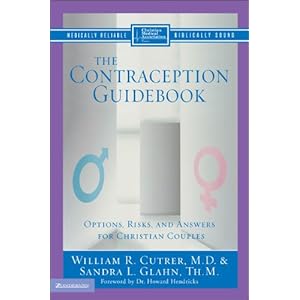
One subject which I have not dealt with are the ethical concerns of different fertility treatments that are out there, which have many similar problems that Christians need to educate themselves on before attempting them as to the positives and negatives of different options.  I would refer anyone wanting more information on the ethical questions of the issues surrounding infertility to The Infertility Companion by William Cutrer.  Anyone who would like more information on contraception, I would encourage you to check out Cutrer's The Contraception Guidebook.  Both are well done and great reads.  Sadly there are few well-done and current Christian books on either subject.


Thursday, January 19, 2012

Singing to One Another In...

My goal this year is to be more faithful than I have previously been at blogging. I am shooting for more consistency in this area both because it is helpful for myself, but also because I find a great amount of encouragement from friends who blog well.

My first post this year will be small (as hopefully most of them will). In the midst of doing sermon prep this week for a passage from Ephesians 5, I was greatly moved by this sermon by John Piper (one of my faves, but I am not a Piper disciple on the same level as a lot of guys I know). If you have 30 minutes, this is a great look at church music, why music?, and the goal of music.


Tuesday, May 3, 2011

Justice, Revenge, and Greater Good: What is the appropriate Christian response?

Before I delve too deep into this, I want to mention one other article, written by someone wiser than me, who has also given his thoughts on this issue. You can read his writing below. My hope was to have more, but out of a good size list of people that I would look to for a word on this issue, most are silent at the moment.


Now, as far as our response, some of the questions that I am hearing are questions like these:

How much joy is appropriate in this, and do I have any right as a believer to be happy about this?

Are we endorsing murder to rejoice in this man's downfall?

Aren't all sins equal, and are we hypocritical to desire this man to have justice done to him, while we ourselves don't want justice done to us?

Can we as believers think that someone's killing (execution) is the right result to go for?

What is my response to this supposed to be from a Biblical perspective?

This issue is full of emotion, and charged on all sides. I have seen Christians upset about the apparent partying in the streets by other believers who seem to be reveling in the death of someone who needed Jesus' salvation. I have also seen Christians who are rejoicing in what the death of this man could potentially mean for the status of human freedom, and the possible downfall of a certain strain of evil that has had overwhelming consequences in the world in the last 10-15 years. There seems to be this struggle between believers on this issue, which is quickly heating up, and for at least the folks in our faith community, I would like to respond to this issue the best that I can.

1. Are we endorsing murder to rejoice in this man's downfall?

Some have stated that what was carried out against Osama Bin Laden is essentially murder and it would be wrong to give any support to that as believers. However, that doesn't quite fit a Biblical definition of the word. As God relays to His people in the book of Exodus "you shall not kill (literally murder)" he is giving a commandment to individuals, and there are several aspects of that command. First, human life is sacred, and no man has authority over another person's life to take it away. Second, individuals are not to take upon themselves the role of God, or of their society, in giving out justice. It's interesting that while God commands every individual that they are not to kill, He then gives numerous directives to the government of Israel as to when someone earns the death penalty. He distinguishes between someone personally trying to take someone's life, and a society levying justice against an individual.

In the case of Osama Bin Laden, it would not be appropriate to use the word murder, since I believe it would be more appropriate to see this action as a matter of justice that was brought about by a government against whom numerous crimes (which claimed thousands of lives) had been committed.

2. Aren't all sins equal, and are we hypocritical to desire this man to have justice done to him, while we ourselves don't want justice done to us?

On the first question of are all sins equal, the answer is yes and no. All sins are equally effective at causing us to be guilty in front of a Holy God, and need His saving grace alone for salvation. In the work of salvation, God needs to bend over no further to redeem a man like Osama Bin Laden, than He needs to bend over to redeem a man like me. As the Bible states clearly - all fall short, all have sinned.

At the same time it would also be wrong to not recognize a level of injustices committed, and see that in a way God also sees on this level as well. We mentioned Levitical law in the Old Testament already, and you will see by the different punishments that God Himself gives to different crimes that there is a recognition by God that greater wrongdoing needs to carry with it a greater punishment. In the New Testament we see several illustrations of this as well. One of the greatest offenses that the people of Jesus' hometown committed was refusing to believe in Him. He says to them that it will be more bearable for Sodom and Gomorrah on judgment day than it will be for them. While there is an equality in sinful separation from a Holy God, there are numerous examples in Scripture to point to there being levels of wrong that point to appropriate levels of retribution.

3. Can we as believers think that someone's killing (execution) is the right result to go for?

I think this is something that it seems like Christians have been more hesitant to answer. Certainly, Christians are not called to rejoice in simply the fact of life being taken from someone. To rejoice in the fact that Osama suffered death, that he is facing eternal judgment, or in any of the facets of how he was taken out, would be wrong for a believer to take joy in - because that is what each of us deserve apart from Christ (death, eternal judgment, wrath, and the revenge of God).


But can we say that somehow even a Christian could say that killing Osama Bin Laden was an appropriate goal? I was reminded amidst some of the discussion on this topic of a man named Dietrich Boenhoffer. He has become widely popular in evangelical circles in recent years, and was a pastor, theologian, and is held by many to have been an incredibly dedicated follower of Jesus Christ. He was one other thing as well, an assassin. Dietrich planned an attempt on Adolf Hitler's life, in order to shorten the war, prevent further death by soldiers and in concentration camps, and to remove someone who by his very living was causing death to thousands, even millions of people a year. His attempt was unsuccessful, and he was executed, but it seems that Evangelical Christianity has had no problem in seeing that Dietrich's thought process here was correct.

Osama Bin Laden has been responsible for thousands of innocent lives lost, and not even those of simply the victims of these attacks. Outside of embassy bombings, the USS Cole, and even the September 11 attacks, Bin Laden (along with others) systematically brainwashed people to believing that the very mission of God was they themselves destroying their own lives. He gave them false hopes about their rewards for strapping bombs to themselves, and killing others. This had influence on young and old, male and female. Besides even the victims of the attacks, which were overwhelmingly innocent people of all ages and walks of life, Bin Laden poisoned people of his own culture to in essence murder them. This was all while he was protected, had multiple wives, and enjoyed at least in some form the luxury of being powerful and provided for.

I hold Dietrich Boenhoffer's logic to be correct. When it is clearly identifiable that someone is the perpetrator and instigator of senseless and brutal deaths, one must make a choice to either allow that person to continue killing (and in essence by doing that, take part in the slaughter), or to seek to bring that person to justice through just means. For this reason, I do not think that it is carefully thought out for a believer to simply say "well, it's wrong to kill." You are right that it is, the problem is that you have death on either side of the equation, and the choice becomes deciding on what is just and right. Should we allow innocent people to die, or levy justice against those who freely take lives, even if it involves taking their life?

How much joy is appropriate in this, and do I have any right as a believer to be happy about this and what is my response supposed to be from a Biblical perspective?

This has been one of the major issues at play here, and I have appreciated those who have posted verses like "I have no pleasure in the death of the wicked, but that the wicked turn from his ways and live. Ezekiel 33:11"

There is nothing appropriate for a believer to rejoice in simply in death, revenge, or any similar statement. The Scripture speaks about our greatest hope for one another being in Christ, no matter what that person has done. Jesus tells those listening to love their enemies and to pray for those who persecute them. Would there be rioting in the streets for joy if Bin Laden had come to Christ and became an avid follower of Jesus? I was forced in this scenario to think about the Apostle Paul, and the way that God changed his heart, and the way that the early church (though hesitant at first, understandably) brought him in to their fellowship, though he was responsible for the death of many of their members. Think about what kind of an understanding of the gospel that takes! And yet, it's the understanding that we have been called to.


I remember in 2006 when a man entered an Amish school in Pennsylvania and barricaded the doors. He was a child molester, with plans to molest school children that day. He tied up and fatally shot 5 girls, before taking his own life. I was not yet a parent at that point, but even navigating through how terribly tragic, and embittering, a tragedy like that would be for a parent, now that I am one, made me stop and take pause. The thing that I remember about that incident was how quickly afterward people from that community and even some of those girl's parents began to reinforce their need for forgiveness of this man amongst one another, and not take joy in the eternal punishment he was now facing. That is the kind of radical understanding of the gospel, that we are called to have. That people's souls are held in incredibly high esteem, and our desire for them is not that they burn, but that they come to Christ. Easier said than done.

That being said, I think it is appropriate for Christians to rejoice at what this could possibly mean in terms of both quelling terrorism around the world, and weakening the strength of groups like Al-Qaida. It is appropriate to find closure in events like September 11th, and see that those who are guilty do not go unpunished (regardless of whether or not we ever found Bin Laden). It is appropriate to see this event as a reason once again to find hope in freedom, and the worthy cause of not allowing bullies and powerful extremist minorities to have a free pass at conducting evil.

As Christians though, we need to be very careful in what we are celebrating, and not forget the gospel of Jesus Christ - that each of us deserves a fate worse than death, but God through His love and grace to us, gave His only Son so that anyone who trusts in Him will not meet that end, but instead receive the free gift of eternal life.

Tuesday, February 8, 2011

10 Books That Would Be Helpful to Any Believer

I was asked to compile a list of about 10 books that every Christian should read. I want to say that there is only one book that every Christian should read, which is the Bible. I always hate hearing someone say "this is a book every Christian needs to read", because it implies that somehow 2,000 years of Christians didn't understand crucial information that somehow we have because someone wrote a book.

That being said, Christian books have been a huge blessing to me in my lifetime, and God has used them to show me so much that I might otherwise not have realized. Anytime the gospel is being spoken into your life by an author desiring to illumine the Word to you, you can't go wrong.

The following is my meager attempt at the list that has been a representation of the books that have meant a lot to me over the years. These are in no particular order.

Radical - David Platt

This is the one book I have not read, but it is about seeing Christianity as we are called to live it, not as a safe American lifestyle has forced us to live it. This book is challenging, and life altering from what I understand. I look forward to reading it when my classes are over this summer.


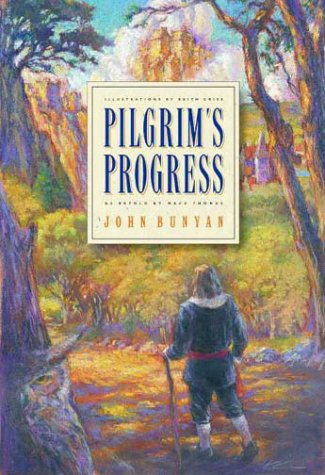
Pilgrim's Progress - John Bunyan

This book was written in the 1600s, and has been the most central and constant book in my life besides the Bible. From watching the cartoon as a kid, to reading the book numerous times in adulthood. Bunyan makes the Christian life into a story, and it is incredibly relevant, even though it was written over 300 years ago. Get a modern version of this. Cheryl Ford's is my favorite, but Warren Wiersbe is also a good modern translation.


Boy Meets Girl - Joshua Harris

Dating books tend to be idealistic, and I haven't read a great many of them. But this one is my favorite, and a very well written insight into the light and dark side of dating, relationships, self-esteem, sin, and everything relevant to the subject. I encourage any single person to check out a good dating book, and this is one of the good ones.


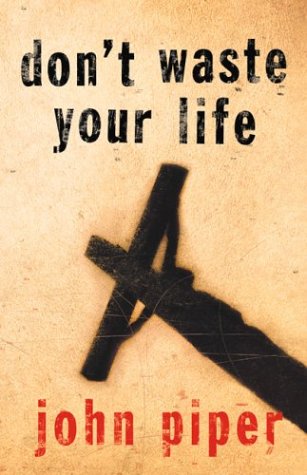
Don't Waste Your Life - John Piper

I appreciate John Piper so much, and this book is challenging and inspiring at the same time. The title pretty much sums it up. Piper's books are all available for free download at desiringgod.org, which is more than enough reason to download the PDFs and check them out.


Jesus Freaks - DC Talk (really Foxe's Book of Martyrs for a new generation)

This boo
k is the one that I forgot to include on Sunday, but it deserves to be there. The first time I picked up this book I read 90 pages before I could put it down. It is simply a testimony of what people sacrificed through the centuries for the sake of Christ. Challenging.


Knowing God - J.I. Packer

If you are looking for a book on God, this is my absolute favorite. It is easy to read for the most part (as much as any book can be on the subject of God). Overall, he is able to say things more simply, yet more deeply, than we often think about. Those of
you who don't like thinking of big words and terms like systematic theology, and all the others, will find both depth and simplicity in this book.


To The Golden Shore: The Life of Adoniram Judson - Courtney Anderson

I want to encourage you to take some point in your life and read a biography of a famous missionary. It will change the way you walk through your life, and what you view as important. Judson's story has been my favorite, and if you aren't ready to tackle the book, you can still listen to part of his story on our church's missions page.

The Pursuit of God - A.W. Tozer

Tozer is an old-school guy with a great handle on the things that we tend to put in God's way, and our own way. His premise is that our problem is that we seek "God and..." This book is a breaking down of that thought process. This is the shortest book by far on this list (under 100 pages).


Chasing Daylight - Erwin McManus

This book is a very well written, entertaining, challenging, and overall 'kick in the pants' of practicing one's faith. The book deals with our tendency to let life, opportunities, and all other sorts of avenues, pass us by. To live for God is to live seizing the moments that He has given us. This is the easiest read on this list, and an
encouragingly challenging book to me.


The Jesus I Never Knew - Philip Yancey

Yancey re-introduces the reader to the Jesus that they assumed they knew after growing up in church, and does so in an incredibly moving and compelling way. This is near the top of the list as far as the impact it has made on my life. It's a book on Jesus that you will find to be a breath of fresh air, and a mind and heart opening experience.


Decision Making and the Will of God - Garry Friesen

This is the book that Jared recommended Sunday, about the nature of the will of God, and what that means for our life. Often times we spend our lives asking questions like "what is God's will for my life?" This book deals with the nature and the response to that question.


Monday, November 29, 2010

J. Hudson Taylor - Missionary to China


Hey Everyone,

Every December or so I get to give my favorite "talk" of the year, which is a missionary biography. Some of you guys got a chance to hear it Sunday night, but I wanted everyone to have a shot.
My hope is that you will throw this in your IPOD or when you just have time to kill you will listen to it. Burn a CD and listen to it in your car on the way home, or just whatever. It's about 45 minutes long.

You all have had to listen to me speak too much, and I realize there is nothing exciting about that. But I want to encourage you to listen to this for the sake of hearing the story of this man and his family, and the missions movement in China in the late 1800s. If you were interested in another story, you can find last year's mission story - Adoniram Judson, on the church website -firstbaptistwelcome.org in the missions resources page.


Tuesday, September 7, 2010

15 Books that...well, you decide

Well, this begins another season of blogging with everyone back in school. These won't come every week, but now and then to give you guys something to chew on. Hope this can still be a resource for you.

Sunday we looked at a part of a lecture (determined by class vote) from the Apologetics Conference last year. The topic was "10 Books that Screwed up the World", which in reality ended up being 15 books.

The basis of his argument was the importance of reading these books, especially for Christians, to understand both the depths and the ramifications of some modern thought. For example, The Descent of Man by Charles Darwin makes Darwinism hit home when arguments are made for applying "Origin of Species" methods, for lack of a better title, to humanity. We might call that social darwinism, or survival of the fittest, but to understand what Darwin meant by those, the Descent of Man outlines the fruit of evolution in society as eugenics (controlling the population through sterilization of certain peoples), and even extermination. This is the side you don't tend to hear about his arguments, but it is important to note for someone to consider themselves an advocate of Darwinism or not.

So here is the list of books (and I promise you I have misspelled some names and titles), along with a summary, if the speaker gave one, of the thoughts expressed in this book:

Machiavelli – The Prince (Beginnings of atheist thought in government. Ultimately, a government should do what is in the best interest of the people and the ruler, even if that means being immoral, because ultimately if you can get a government to not fear hell and punishment, there is much more you can accomplish).

Charles Darwin – The Descent of Man (described above)

Pivot of Civilization – Margaret Sanger (founder of Planned Parenthood, this book is something that most planned parenthood people want others to avoid because of the extreme views voiced in this book. Nevertheless, she is the founder of the movement that is the leading voice in encouraging abortion)

John Stewart Mill – Utilitarianism

Freud – The Future of an Illusion

Renee Descartes – Discourse on Method

Karl Marx – Communist Manifesto (full scope of communism, government that is run with the state and not the individual in mind)

The rest which we did not have time to examine, but that the speaker gives.

Meade – Coming of Age in Samoa

Hobbes – Leviathan

John Jacque Reusau – Discourse on the Origin and Foundations of Inequality Among Men

Lenin – The State and Revolution

Nitsche – Beyond Good and Evil

Adolf Hitler – Mein Kampf

Kinsay – Sexual Behavior in the Human Male/The Male Report

The Feminine Mistique – Betty Fernan

If anyone has questions or comments, or would like a copy of this session, let me know, and I will be happy to burn a DVD and mail it to you. God bless you all, happy reading if there is a book that sticks out to you as something that would be important to examine.